Vibe Coding Won't Save You
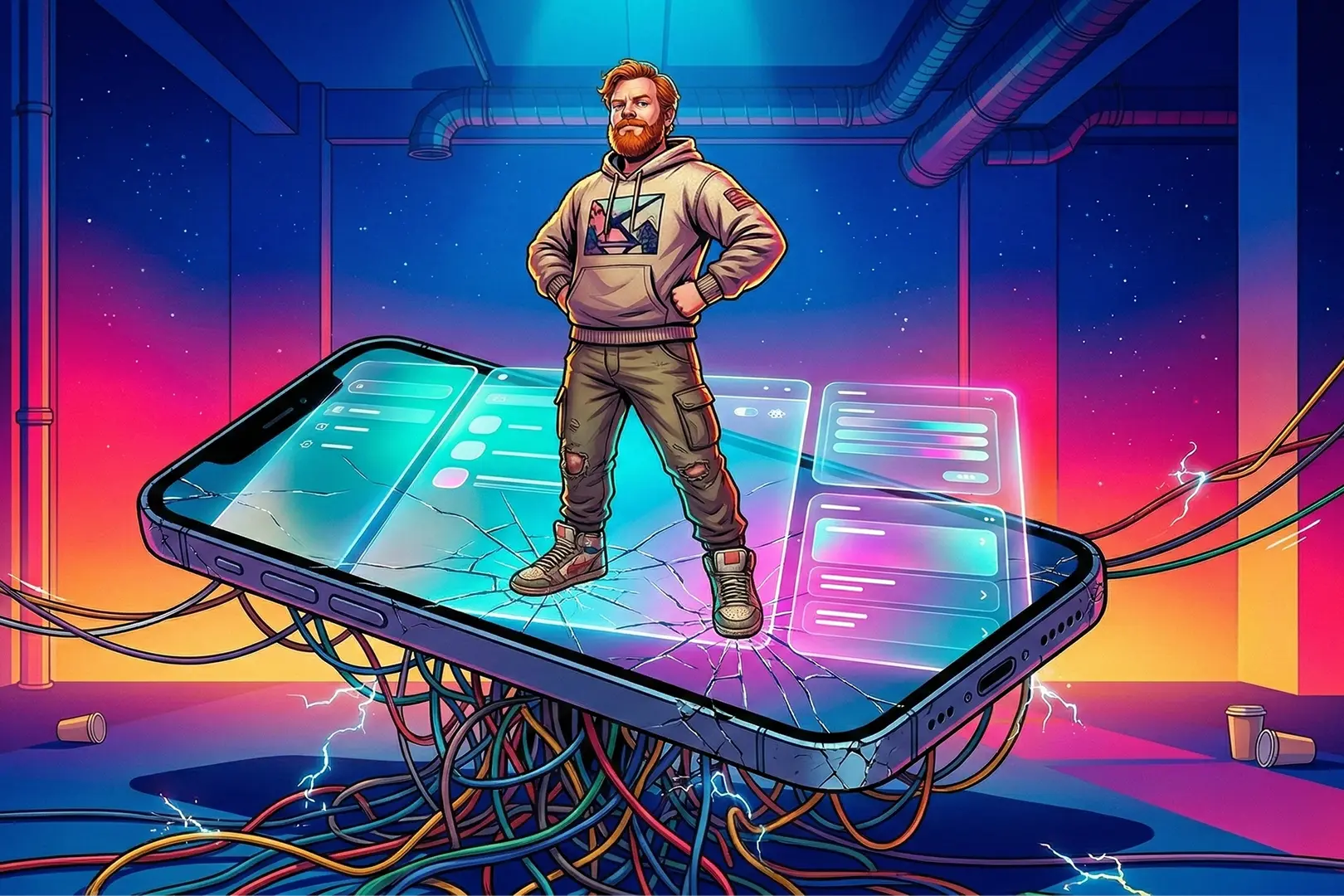
We are living through the most intoxicating moment in software history. A non-technical founder can wake up on Saturday with an idea, open an AI coding assistant, describe a product in plain English, and by Sunday night have something deployed and live. It compiles. It runs. It even looks decent. For the first time, building software feels less like engineering and more like manifestation.
It is powerful. It is also dangerous.
The illusion creeping in right now is that access to tools equals capability. That because you can generate code, you understand what you built. That because something works, it is well designed. The gap between those things is wider than most new founders realize.
The Vibe Engineer
There is a new breed of "vibe engineer" emerging. They are not technical, and that is fine. They are not designers or product thinkers either. They are idea-driven people empowered by AI tools that remove friction. They describe what they want, the model produces code, they copy and paste until it runs. When there is an error, they paste the error back into the model and apply the suggested fix. It feels like progress. It feels like control.
But under the surface, they cannot explain their own architecture. They do not know why one database structure was chosen over another. They cannot reason about scalability, performance, or security tradeoffs. They are piloting a machine they did not design and do not understand.
It works beautifully until it doesn't.
Everyone Has the Same Superpowers
What makes this moment even more deceptive is that everyone now has the same superpowers. Your competitor has access to the same AI tools. A college student has access to the same no-code platforms. A designer with curiosity can spin up a prototype just as quickly as you can. The scarcity is no longer access to building. The scarcity is depth of understanding.
We are about to see an explosion of thin software. Apps that technically function but collapse under real usage. Dashboards glued together with generated logic. AI wrappers layered on top of other AI wrappers. Products that feel impressive in a demo but fragile in production. The internet will fill with software slop, not because people are lazy, but because the tools make it easy to skip the hard thinking.
Building something that runs is not the same as building something that lasts.
Ideas Were Never the Hard Part
The uncomfortable truth is that ideas were never the hard part. Founders love to believe their idea is the rare asset. The insight. The differentiator. And for years, the inability to build it themselves felt like the main barrier. Now that the barrier appears gone, it feels like victory.
But building something that runs is not the same as building something that lasts.
Real engineering is not just writing code. It is making tradeoffs. It is designing systems so future features do not break old ones. It is thinking about failure states before they happen. It is understanding how today's shortcut becomes tomorrow's rewrite. It is anticipating scale, edge cases, security holes, and performance bottlenecks before users expose them publicly.
You can vibe your way to a prototype. You cannot vibe your way to resilient architecture.
Experimentation Does Not Replace Expertise
This is not an argument against AI or no-code tools. They are extraordinary. They allow founders to test ideas quickly, to validate demand before hiring, to experiment without raising capital. That is progress. The mistake is believing experimentation replaces expertise.
At some point, if the idea is serious, someone has to understand the machinery. Someone has to decide why the backend is structured a certain way. Someone has to evaluate infrastructure costs at scale. Someone has to ensure user data is protected properly. Someone has to debug without blindly pasting error logs into a prompt box.
You do not need to be that person as a founder. But someone does.
Technical Literacy Is the Real Skill
The real skill for modern founders is not coding everything themselves. It is technical literacy. It is knowing enough to ask intelligent questions. Why are we choosing this stack? What happens if traffic grows tenfold? Where are the failure points? How difficult will this be to maintain in two years? Blind trust in AI output is not strategy. It is outsourcing understanding.
Ironically, the flood of vibe-built apps will increase the value of real engineering. When everyone can ship quickly, quality becomes visible. Stability becomes noticeable. Thoughtful architecture becomes competitive advantage. The market will not reward whoever generated the most code with the fewest keystrokes. It will reward whoever built something that survives contact with reality.
Use AI as Leverage, Not Substitute
This is the moment to use AI as leverage, not as a substitute for thinking. To move faster, not to think less. To prototype boldly, but to respect the depth required to build something durable.
Vibes can get you started.
If you want to build something that lasts, you still need someone who knows what they are doing.
That is the work we do every day as a web development team in Cape Town: taking ideas that started as prototypes and turning them into software that holds up.